
OFFICIAL RWANDA’S FIRST AUTOMATIC UPPER-AIR OBSERVATION STATION
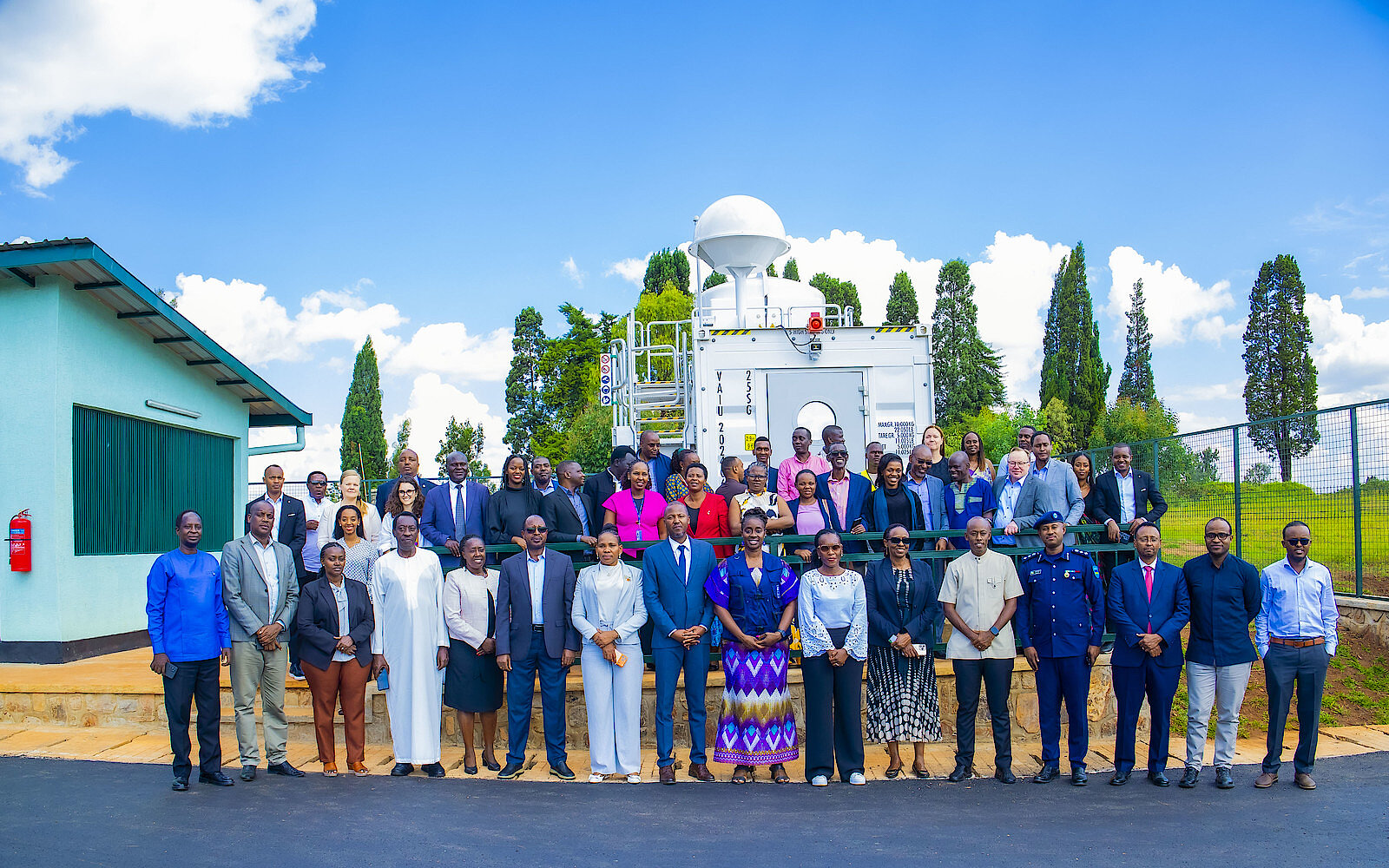
On the 4th June 2026 in Southern Province, Huye District, the Rwanda Meteorology Agency officially launched Rwanda's first automatic upper-air observation station. The station is a major step forward in strengthening weather forecasting, climate monitoring, and Rwanda’s contribution to global meteorological observations for early warning for all.
This milestone represents a significant achievement made possible through the strong partnership and support of the Government of Rwanda, the World Meteorological Organization (WMO), UNDP Rwanda, and the Finnish Meteorological Institute.
Upper-Air observation refers to the systematic measurement and monitoring of atmospheric conditions above the Earth’s surface, typically from the lower troposphere to higher atmospheric levels of approximately 30 km. These observations are conducted using specialized instruments such as radiosondes, weather balloons, and remote sensing systems to collect data on key parameters.
The data collected through upper-air observations are used to initialize numerical weather prediction (NWP) models, which are the backbone of modern weather forecasting. Upper-air observations are also essential for climate research and monitoring. By providing long-term records of atmospheric conditions aloft, upper-air observations help scientists to understand climate variability and change.
Upper-air observations are a vital component of modern weather forecasting, providing critical data on atmospheric conditions aloft. These observations involve measuring various meteorological parameters such as temperature, humidity, wind speed, and pressure at different heights above the Earth's surface. The importance of upper-air observations cannot be overstated, as they play a crucial role in understanding and predicting weather patterns.
This station utilizes various technologies and techniques to gather information, including radiosondes, weather balloons and remote sensing systems. Radiosondes are instruments that measure atmospheric conditions such as temperature, humidity, and wind speed and are typically attached to weather balloons that rise through the atmosphere. The data collected by these instruments is transmitted back to ground stations, allowing meteorologists to track changes in the atmosphere and improve weather forecasting.
Upper-air observations provide essential information on temperature, humidity, wind, and atmospheric pressure at different altitudes that cannot be measured from the ground and cannot be fully captured by satellites alone.
“This achievement marks a major milestone in the advancement of meteorological services in Rwanda. For the first time, the country will have the capacity to routinely observe atmospheric conditions beyond the surface, generating critical upper-air data that are essential for improving the accuracy of weather forecasts and strengthening early warning systems.
This landmark accomplishment significantly enhances Rwanda’s national forecasting capabilities while also contributing valuable meteorological observations to the global weather and climate monitoring network.” DG of METEO RWANDA
In her remarks, Minister of Environment, Dr. Bernadette ARAKWIYE, highlighted that the station marks a major step forward in strengthening weather forecasting, climate monitoring, and the availability of meteorological data for early warning systems, while helping to address critical observational gaps at both regional and global levels.
“Rwanda has successfully commenced twice-daily upper-air observations and is preparing to share the resulting data through international meteorological networks, strengthening both national weather forecasting capabilities and global meteorological data exchange. This achievement represents a historic milestone for the Systematic Observations Financing Facility (SOFF), marking the inauguration of the first new upper-air observation station established under the SOFF portfolio worldwide.” Said Prof. Celeste Saulo, Secretary General of WMO
This first Upper-Air Observation launched in Rwanda will provide critical atmospheric information that complements data collected by existing meteorological instruments, including surface observation systems, weather radar, and forecasting platforms, thereby strengthening the national observation network. As a result, the station will significantly enhance the accuracy of weather forecasting, climate monitoring, and early warning services, ultimately supporting national socio-economic development. The installation of the Upper-Air Observation system was funded through an investment of USD 3.5 million.